
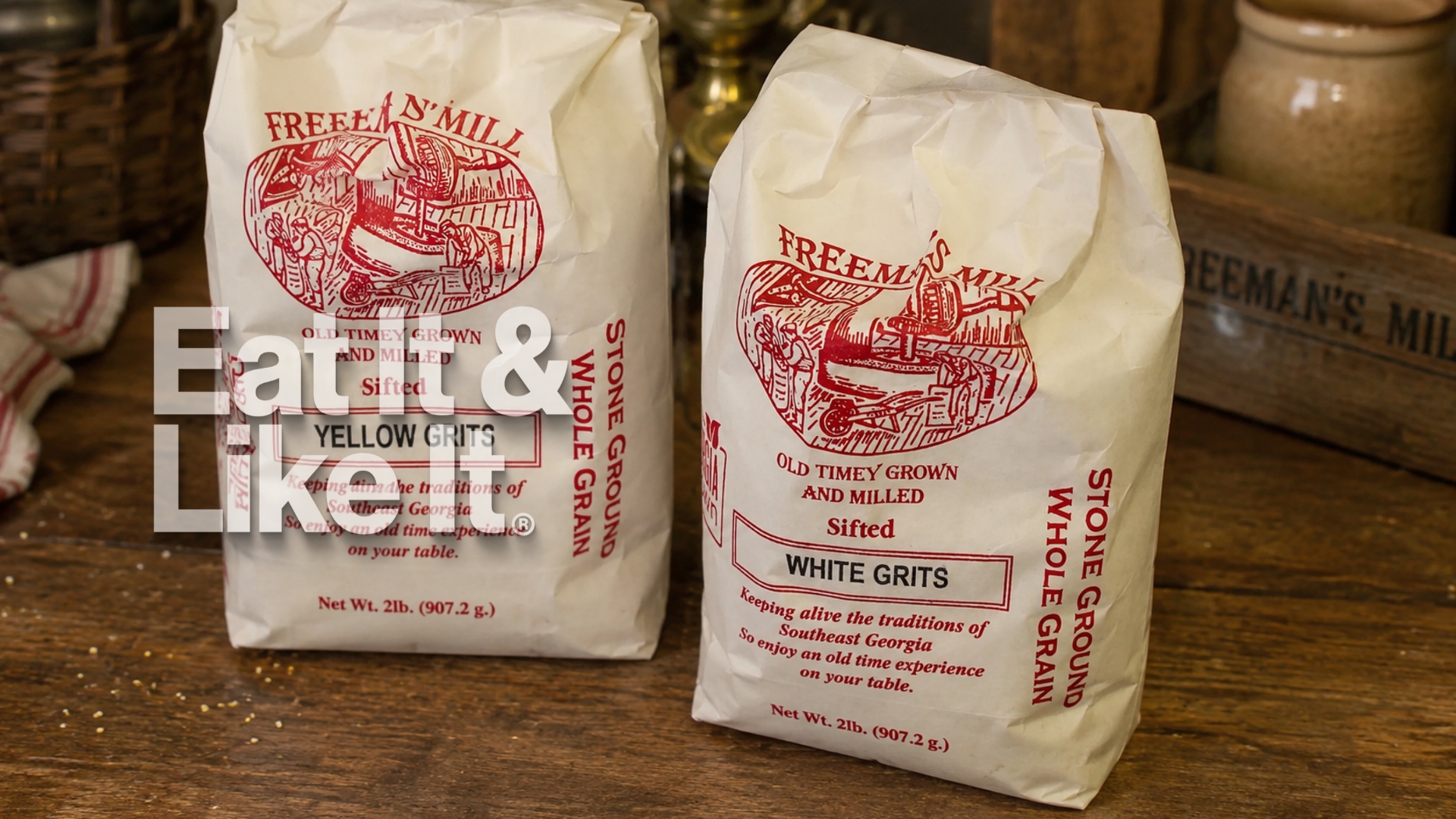

At Freeman’s Mill, Grits Come With a Side of Georgia History
We first caught up with Stacey Freeman more than a decade ago, out in Bulloch County, somewhere between Statesboro and Register.
Back then, he was making grits the old-fashioned way.
Here we are all these years later, and that part of the story has not changed. Stacey Freeman is still making grits. Still making cornmeal. Still making flour. Still tinkering with old tractors, old engines and old pieces of equipment that most people would have either sold off, scrapped or parked somewhere as decoration.
Not Stacey.
At Freeman’s Mill, old things still have work to do.
That is especially true of the mill itself, which is really the star of this story. This is not some modern machine dressed up to look historic. The stone mill at Freeman’s Mill started spinning just after the Civil War.
Let that sit there for a minute.
This piece of equipment has been grinding corn longer than any of us have been around. It was here before World War I. Before World War II. Before Korea. Before Vietnam. Before grocery stores became the default answer for just about everything. It has helped feed families, generation after generation, and it is still doing the job today.
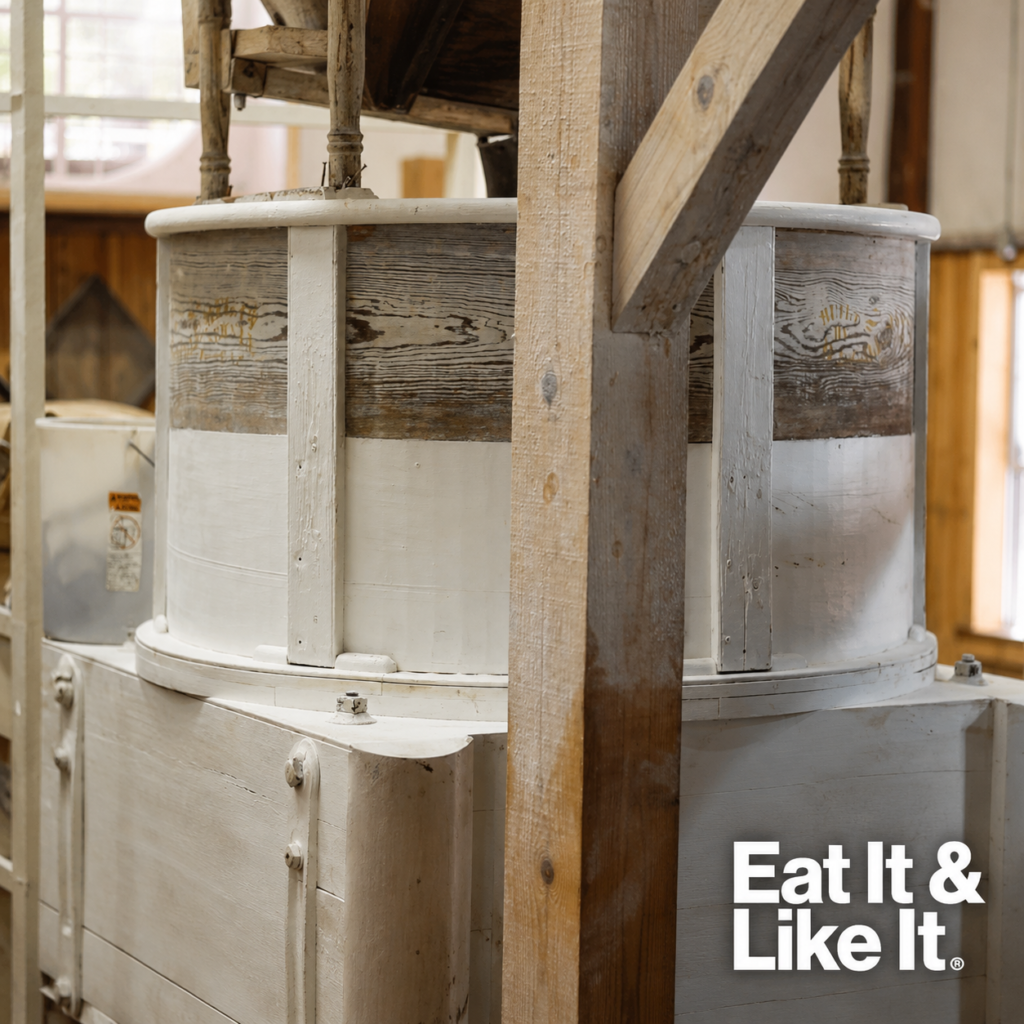
“This machine right here ground corn and cornmeal to take families through World War I, World War II, Korea, Vietnam, and it’s coming right on to today,” Freeman told us. “That’s history. That’s history that we’re still using.”
That line says a lot about Freeman’s Mill.
Yes, the grits are good. Yes, the cornmeal has a following. Yes, Freeman’s Mill products are still available for purchase online and in select stores around the region. Over the years, they have found their way into restaurants, regional shops and even school-system kitchens in this part of Georgia.
But the bigger story is not just what goes in the bag. The bigger story is preservation, and it is simply fascinating.
Freeman comes from a family with deep roots in this part of Georgia. Parts of his family have been in Bulloch County and this corner of coastal Georgia going back to the colonial days. That is a long time to be connected to one piece of land, one way of life and one region’s rhythms.
Before Freeman’s Mill became a business, this was family land. Farm land. A place where old tractors and farm equipment were not conversation pieces. They were how people got by.
Freeman left for college, graduated from Mercer with a degree in religion and philosophy, minored in history, and later continued his education in adult vocational education. In a funny way, all of that prepared him perfectly for what he does now. He came back home with a historian’s respect for the past and a mechanic’s willingness to get his hands dirty.
“We knew that there’s a whole history of agricultural machinery that’s really the history of agriculture was disappearing,” he said. “The way of life my granddaddy and my daddy and the family had lived, and having a background in history, I wanted to do something about it.”
That “something” eventually became Freeman’s Mill.
The path was not exactly a straight one. Freeman worked as an instructor for years before the recession of 2008 took that job away. That could have been the end of one chapter and the beginning of a much harder one. Instead, after some long thought, he fired up the family mill.
From there, it was farmers markets, cooking samples and putting spoonfuls of grits in front of people who may or may not have understood what they were tasting.
“We spent a lot of money cooking samples and just giving people a spoonful,” Freeman said. “‘Listen, how does this taste? Can you taste it?’”
They could.
One spoonful at a time, the word got around. Freeman’s Mill became known for grits, cornmeal and flour made with a kind of care that is harder and harder to find. The product mattered, obviously, but so did the story behind it.
And if you spend any time with Stacey Freeman, you understand pretty quickly that the business side is not the part that gets him most excited.
His passion is outside, around the property, among the tractors and old engines and equipment that still work because he cared enough to keep them working.
“Why throw it away just because it’s old?” he said.
That might as well be painted over the front door.
Every machine on the property has a purpose. Some are used regularly. Some are fired up maybe once a year. Some sit quietly until they are needed. But none of them are forgotten. Freeman knows what they are, where they came from and what they meant to the people who used them.
He also knows what happens if they disappear.
“I’ve got a great-grandson who’s a year and a half right now,” he said. “If we didn’t have tractors that his great granddaddy and great-great-granddaddy had and his great uncles and we farmed with, once those tractors are gone, he’ll never see one.”
That is the heart of the place.
People stop by Freeman’s Mill just to visit. Some are buying grits. Some are buying cornmeal. Some are chasing a memory. Freeman says people remember going to the mill with their own families, bringing corn to be ground, watching the work happen right in front of them.
“I’ve had people just tears come to their eyes with the memories of coming to a place where they can see things like that,” he said.
That is more than nostalgia. That is part of the South that is worth protecting.
We talk a lot about Southern food traditions, but sometimes we skip right to the finished plate. Shrimp and grits. Cornbread. Fish fry. Sunday supper. We forget that all of it starts somewhere. It starts with land. With machinery. With farmers. With millers. With people who knew how to make something useful because they had to.
At Freeman’s Mill, that connection is still alive.
And Stacey Freeman knows it.
“That grits mill right there, it talks to you,” he said. “When it’s running, it has a rhythm that it’s telling you everything’s alright. Everything’s alright. And if something’s not right, it’ll tell you it’s not right. Pay attention.”
That is a great line because you believe him when he says it.
The mill has a rhythm. The place has a rhythm. The whole property feels like it belongs to another time, except it is not frozen in the past. That is the important part. Freeman is not just showing off old equipment. He is using it. He is making something with it. He is feeding people with it.
After 46 years, he is still at it.
“I’m one of very few millers left in this state,” Freeman said at the time. “That’s an honor.”
It sure is. Today, Freeman is one of only a small number of independent grits millers still operating in Georgia. Probably fewer than 10.
The next time you see Freeman’s Mill grits on a shelf, online or on a restaurant menu somewhere in this region, understand what you are looking at. That bag is not just corn in a paper sack.
It is a family story.
It is Georgia history.
It is the sound of a Civil War-era mill still doing what it was built to do.
And in a world where so much gets tossed aside the minute it gets old, there is something pretty wonderful about that.