
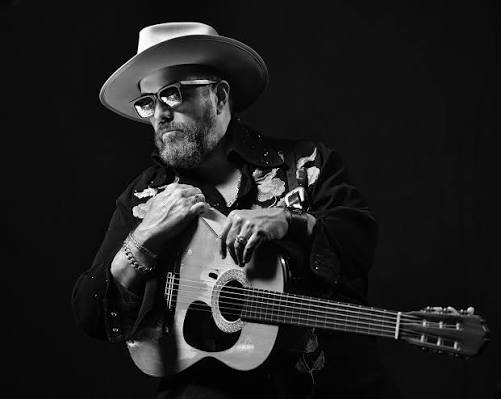

Remembering The Mavericks Raul Malo: 40 Years of Pride
In this episode, Jesse puts the food aside for a moment to share a story that goes back to his days in High School in Miami, Florida and the guy with the soulful voice and charisma for miles that now leaves behind quite a legacy Country Music… The lead singer of The Mavericks Raul Malo who passed away at the age of 60.

This story goes back about 40 years. Time flies, but yeah, it’s been 40 years or so almost, coming up on, and my time in high school. Christopher Columbus High School in Miami, Florida’s Westchester neighborhood. During which time we had a little garage band, me and a couple of family members and my childhood neighbor, Tony. We had a little garage band, nothing too terribly serious, although we thought it was at the time. And we would play, you know, dances here and there, school here, church there, whatever it was, we’d play our covers and stuff.
But in so being, we had interest in other local bands on the scene in Miami at the time. We got tipped off to a local band by the name of The Tomboys. “Hey, you guys should go check them out. They do the same thing you guys do.” “Okay, okay, okay.” So we went to a festival in downtown Coral Gables back then. I forget what the name of the festival was, but that’s hardly the point here, to check out The Tomboys. And in so doing, it was these three guys playing a little bit of rock and roll, a little bit of—they had some ballads—but they jammed. The Tomboys were great. We were fans instantly. They jammed enough of the guitar, you know, there was enough little bit of testosterone, if you will, for the guys to get into it, and guitar solos and all that stuff. But they also busted out some ballads, and the girls would go crazy.
I chuckled because years later when we saw them three or four times on the circuit, they had developed a following. And when they whipped out some of these ballads, like one was called “Paper Heart,” the girls would go crazy. The singer’s voice was just so soulful and beautiful and perfect. Girls would go crazy. It was quite a scene. The Tomboys were great. The Tomboys had it all going for them. They had the look, they had catchy tunes, they had a soulful voice.
And it was at that point that my cousin told me, around that time, “Yeah, the singer, that’s Raul. Raul used to ride the bus with us to high school.” We all, back then—not all of us, but a lot of guys—would ride the number 24 city bus to Columbus High School back in the day. And while I did not remember, Raul was on that bus with us for a short time because he also went to Columbus High School. And so, okay, cool. Got to know. Raul was a guy from Columbus, and you know, they had this great band, and they seemed to have it all packaged beautifully. And we all thought, you know what, they’ve got it going on. If they can catch a break or they can break out of here, these guys can—they have what it takes to make it. They had it. And anyone who witnessed a Tomboys show knew they had it. They did.
And so for a few years, we’d catch them around town until, said time, a few years later when I found out that Raul, the singer of The Tomboys, had gone country. Thought, “Okay, do Cuban Americans from Miami go country?” We didn’t think so, but hey, “Good on you, brother. Good luck with that.” Didn’t think anything of it after that. You know, information wasn’t nearly as ubiquitous as it is now. You can’t follow people on Facebook and get updated instantly around the world about what’s going on with everybody’s lives or whatever. So you lose touch, and you—somebody tells you something, “I heard this or I heard that.” And that was kind of how information traveled back in the day, in the Stone Age.
Fast forward a few small years later—a few short years later, I should say—and a young lady I was dating my first couple of years of college takes me to see a band in Miami’s Coconut Grove neighborhood. And we go. The name of the bar was on Commodore Plaza. The name of this bar—I don’t remember the name of the bar at the time. It’s been a hundred million things since then. It’s now a restaurant, I believe. But the name of the band was Humane Society. And, “Okay, cover band,” you know. People go there, have a few drinks, dance, whatever. A typical weekend night cover band in the Grove, where we all got our kicks back in the day, Coconut Grove.
And so in hanging out, watching Humane Society, they were a great band, and me having been in a high school band—I wasn’t in the band anymore—and having played drums, I got to chatting with their drummer. Come to find out his name was Paul. So Paul, a super cool guy. We used to chat, you know, we’d go every once in a while. “Hey, what’s up, man? How you doing? Cool. Buy you a beer, buy you a beer,” whatever, you know, just hanging out. Shop talk, small talk, whatever. “Hey, what are you guys playing next?” kind of stuff. Got to know Paul a little bit. No big deal. Just someone else, you know, along the way. And so…
Around that same time, I was at Publix supermarket, and I see Raul. And obviously, I knew of Raul from their time with The Tomboys, but I see Raul in the front of this grocery store in a predominantly Hispanic neighborhood in Miami with his manager at the time, John Tovar. And I recognize Raul from a mile away, and I knew who John Tovar was—had never met him. And I see them walking into this Publix, and so I approach Raul. Said, “Hey, man, how are you?” And Raul’s wearing this big old, I guess they call them ten-gallon hats. This was about a 50-gallon hat. And it stuck out like a sore thumb because here we are in Publix in Miami, Florida, and here’s Raul Malo looking like a cowboy. It made sense to me because I had heard a few years sooner that Raul had gone country, but I didn’t think anything of it. It wasn’t like it was funny or anything. It was like, “Okay, Raul’s gone country. How are you?” “Good. What’s going on?” “Oh, we’re doing this. We’re doing that. We’re playing a show. You should come check us out.” Invited us.
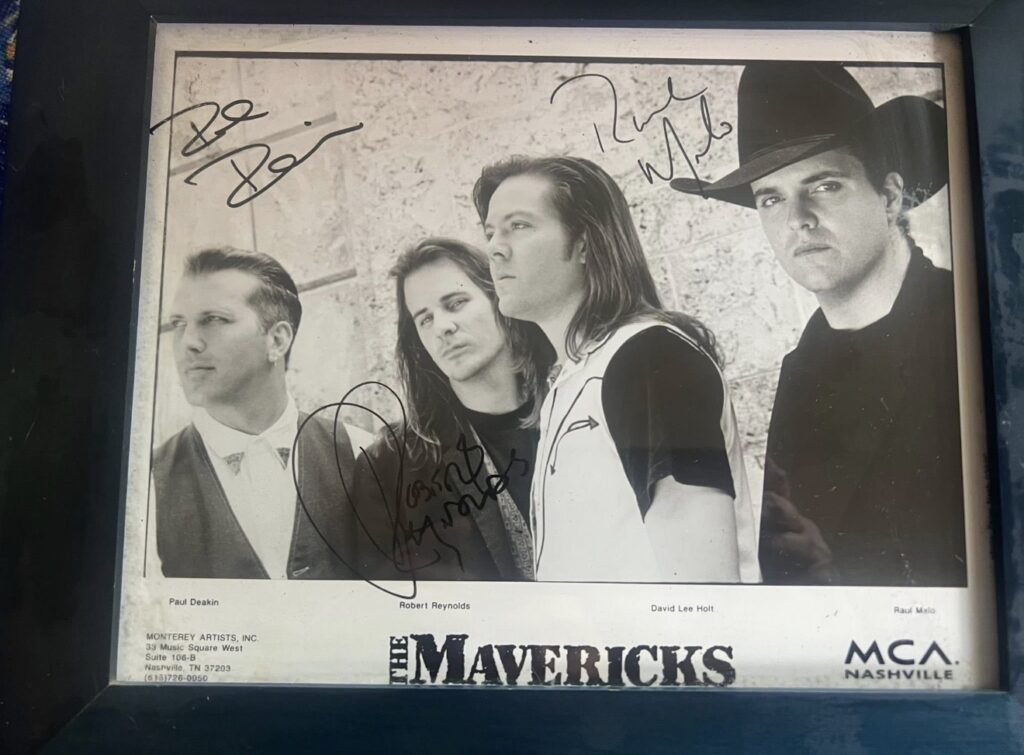
I would assume it was at Churchill’s Hideaway, which is a very popular spot back in the day for the band and where they played their first show in December, I believe. December 8th, I believe it was, when they played their first show. I saw the flyer just a few days ago posted to Facebook. The accompanying act was Vesper Sparrow, which was just a total blast from the past in Miami, those of us who knew the music scene. And so did make it to the show, did not go to check out The Mavericks, but wish them well, obviously, local pride and all that good stuff.
And I left Miami shortly thereafter. I would say within two years I was gone. Hurricane Andrew came through. Shortly after that, I left Miami for good and landed in Athens, Georgia. I transferred—little-known secret about me—I matriculated for a very short time at the University of Georgia and got a job at a tiny, and I mean tiny—you have to go outside to change your mind—television station in Bogart, Georgia, just outside of Athens, in the Master Control Department, which comprised of, at night, especially if you got the night shift, you had to play music videos to fill the time.
So in the process of getting to work and learning the shifts and all that stuff, music videos would play all the time. And it was there that I saw this video up on one of the TV screens in the lobby of the TV station. And I see it from a distance, and I see some scenes—I wasn’t hearing it—but I’m seeing scenes from South Beach in Miami, where I was obviously from. Recognized it, recognized the streets and all that, and like, “Hey, that’s South Beach.” I go and I turn up the volume, and I hear and I see now this band playing a cover tune of Hank Williams, “Hey Good Lookin’.” And I’m watching this video, and it’s scenes from South Beach, and it’s Raul with his cowboy hat and this band playing at a local club in Miami. And I’m like, “My God, that’s Raul! Oh, my God! No, my God, that’s Paul,” the drummer that I had met in the Grove all those years before. “They did it!”
And I’m standing there in the lobby of this TV station watching this going, “Oh, my God! I can’t believe this! I can’t believe this! This is unbelievable!” So happy for them. It was like this moment, like the world became color TV at that point, right before my eyes. I was so thrilled for them. The song was great. The video, you know, reminded me of home. I had left Miami. And it became the running joke in the TV station that whenever whoever was watching the TV station at home—it wasn’t working that night—knew that Jesse was on the clock because The Mavericks were in heavy rotation in that video. “Yeah, they play it. What? How many times did that play? Four times that night? We knew you were working.” Yeah, it was. “What? I had The Mavericks on heavy rotation.” It was catchy and fun, and it was scenes from South Beach long before it became the international mecca that it is today. It was so cool, but I was an instant fan because they jammed. They just totally jammed. It was great.
Around that time, The Mavericks—this is 1993—The Mavericks explode onto the country music scene in the early ’90s. They were nominated for all the awards: CMAs, AMAs, Grammys. In 1996, they wind up winning the Grammy for Best Country Performance by a Duo or Group with a Vocal. You know, it was just awesome to watch from afar because as I mentioned a few minutes ago, information didn’t travel nearly as quickly then, even in the ’90s, as it does now. So if you don’t really exist in the country music world, which I didn’t at the time and still don’t, you’d find out on the news or the next day or a week later, “Hey, they were nominated again.” “Hey, they won this or they didn’t win that,” or whatever. And so there was total, total hometown pride from afar.
Always, fate would have it, seven, eight years later, I ended up getting a job at the Fox television station in Nashville. I moved there in 2004 with my family. Within a year of moving to Nashville, The Mavericks, who had broken up for a minute, had gotten back together, and they were going to play a free concert in an empty parking lot, an unpaved gravel parking lot, in front of one of my favorite restaurants on the West End in Nashville called The Boundary. And so me being there, I find out—it was like a midweek thing; it was like a Wednesday night. One of my childhood buddies who I was in the band with when we were kids, Tony, was also, just by coincidence, living in Nashville at the time. And I told him, “Hey, we gotta go. We gotta go see The Mavericks. We gotta go, we gotta go, we gotta go.” And so we went.
We went that night to see The Mavericks, and it was just every bit as awesome as we thought it could be, as we hoped it would be. Their blend of classic rock and classic country with, you know, Latin American flavor and Raul’s voice, which was just so unbelievably good, was just wonderful. It was so much fun. They were so good. The energy, everything about that night was just fantastic. That show was so good. We loved it.
So after the show—the concert had happened right in front of this restaurant slash bar, The Boundary—Tony and I go in to The Boundary to have a cocktail after. We go upstairs. There was an upstairs bar there at the time. And so we’re there, you know, carrying on like we did back in the day. And about 45 minutes after the show ended, I look, and here comes up the stairs, Raul. So I see him, and I hadn’t seen Raul since probably that time that I just told you about, ran into him at the supermarket when he had his cowboy hat. And I see him, and he comes up the stairs, and he comes walking right over to where we are, trying to squeeze into a spot at the bar.
And I said to him, “Hey, man, you guys didn’t play ‘Paper Heart’,” which was one of their big ballads back in the day when the girls would go crazy and we were all teenagers basically. And he looked at me like I had three heads, and he said, “Whoa, ‘Paper Heart’?” And he starts laughing. And I reach out and shake his hand. Said, “You don’t remember me, but blah, blah, blah, blah, blah. I live here now.” And so that turned into a really, really cool evening where me and Tony, Raul, shared a couple of cocktails, hung out, talked about Miami, talked about the music scene in Nashville, and had an overall great, great conversation with a guy that we were, at the time, so incredibly proud of and everything that they had accomplished to that point. Yeah, it was just, it was really cool. Just hang out, three guys talking shop. Afterward, “God bless, so incredibly proud of you.” That was that. Didn’t cross, we didn’t exchange numbers. This was long before we could take selfies and all of that stuff. It was like, “Good to see you, man. Take care.” And we left.
A year or so later, I saw Raul again, this time in East Nashville at a place called the Lipstick Lounge in East Nashville. If you know, you know. That was right down the street from my house. He was with a friend. My wife was there entertaining her best friend in Nashville for the first time. And so, you know, I didn’t want to interrupt anybody. Said hello, let it be. And if we had had a chance to chat some more, probably would have, but we didn’t. It was good to see him. Okay, cool. Whatever.
About a year after that, I finally left Nashville, moved, and promised myself that whenever The Mavericks came through town, I would go see them whenever I could. I would get to see them, get to see them. Well, if you know The Mavericks’ history, they wound up breaking up again for a number of years. And so in all of that, it took me 20, 20 years, two decades, to catch up with The Mavericks and Raul Malo again and Paul Deacon, the drummer. 20 years.
In January of 2024, I bought myself a ticket to go see them in Charleston, South Carolina. Spent the weekend in Charleston by myself. My wife had gone up to New York City to go see Madonna with our daughter, who had done her classics reunion tour at the time. And so I sat up in the front row of the balcony at the Charleston Music Hall with a nice three or four-beer buzz—knowing me it was four or five—to enjoy what wound up being just an unbelievably wonderful, for me a little bit nostalgic, beautiful experience listening to this great band and Raul’s soulful voice and everything that those guys brought to the table. It was just so amazing, so wonderful. Enjoyed it so much. I had to pay twice as much as I did for that ticket to see them again.
Great night. Moved on, promised myself if they ever came through Savannah where I live and have been for the better part of 20-something years that I would go see them. Come to find out in the summer of ’25 that they are coming to Savannah. They’re scheduled to open for Dwight Yoakam here on November 14th at our brand new arena here. It’s a couple of years old now, but they were finally—The Mavericks were finally coming to Savannah to open for Dwight Yoakam, the concert here. And you better believe it was going to be a Friday night, November 14th. I was planning to be there, and not only that, but I was going to try to pull any kind of punches I could, any kind of phone calls I could make, to try to get backstage to see Raul and Paul again and shake their hand, give them a hug, and just, you know, encapsulate, if you will, 40 years following these guys and hometown pride and all of that good stuff.
But earlier in the fall, late summer, fall, we found out Raul and his family announced that the dates on the tour would be canceled because Raul had been diagnosed with a rare form of brain cancer. Treatments would begin immediately, and if they could get on top of this, then the hope was they could be back out there. But it became very difficult, very obvious for those of us who were paying close attention. It became very difficult. Raul’s wife, Betty, courageously, so unbelievably courageously shared as much as she could with everyone on social media. Friends and family who were in Nashville got to spend some time with Raul as circumstances allowed, and we got a peek at some of that.
The outpouring from around the country and around the world was just beautiful. So beautiful the last few months. And there was one moment, one video that Ms. Betty shared where Raul was sitting at a table, and he said, “I can’t believe this,” referring to the outpouring from everybody everywhere. “I’m just a guy going through life. I didn’t expect the reaction to be like this. I’m just a guy going through life.” And that touched me. It really did. There was humility there that I recognized, that I felt. It didn’t matter how big Raul Malo’s star had become to so many of us. He was just Raul, the guy who loved to make music and make people happy with it. I think those who knew him knew that. And I knew him, as I’ve told this story, from afar. And I knew that. It was so touching. It was so touching.
And we knew this day would come, obviously, and that day was December the 8th. Raul passed away at the age of 60. And I was so inspired in his honor to share some of these memories with anyone who also had a love and admiration for a guy from Miami who rose to great heights in the country music world. I don’t think anybody would doubt that. You know, some people thought it was weird. Cuban-American from Miami, country music. And he did all that he did. Hell yes he did.
And if I had a chance to share everything I’ve just shared with you now with Raul, it’s more than likely he wouldn’t have remembered any of it, but that’s okay. Because what matters is that we will never forget Raul and his passion and joy for life and the legacy that he absolutely leaves behind and so much of what his family should and I’m sure very much are so incredibly proud of. We will never forget, those of us who are fans, the guy from Miracle Mile who sang “Paper Heart” and made the girls go crazy. The husband, father, son, friend to so many people. A life well lived.
My condolences to Betty, his wife, their children. May God bless you all. My condolences to Betty, his wife, and their children. May God bless you all, now and forever.